



Capacitor Surface Temperature Measurement & Monitoring
Overview
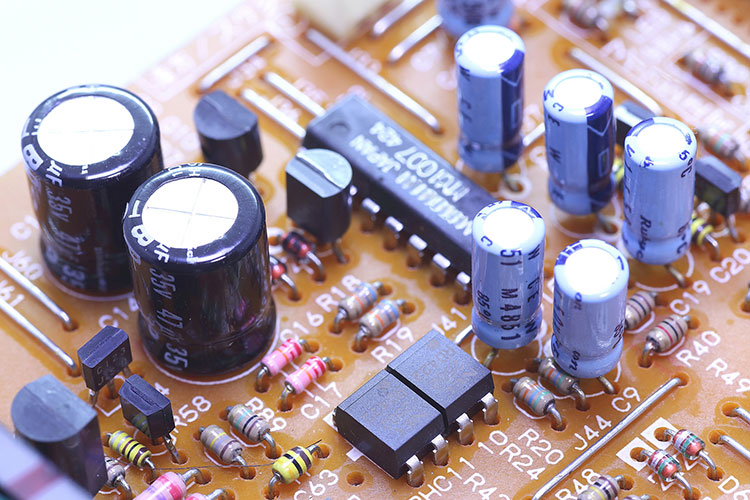
Capacitors (also known as condensers) are critical components in modern electronic systems, especially in power electronics, electric vehicles (EV), renewable energy inverters, industrial motor drives, and AI data center power supplies. These systems rely on capacitors to perform essential functions such as energy storage, voltage stabilization, filtering, and DC link buffering.
As electronic systems become more compact and power-dense, thermal management has become one of the most important design challenges in power electronics engineering. Capacitors are particularly sensitive to temperature, and excessive heat can significantly reduce their lifetime and reliability.
Because of this, capacitor temperature monitoring and accurate capacitor temperature measurement have become standard practices in modern power electronics design. Engineers increasingly rely on capacitor temperature sensors to detect overheating, optimize thermal design, and enable predictive maintenance
Industries

This application is highly relevant to rapidly growing industries centered on AI data server infrastructure, advanced power electronics, and thermal management technologies. As system power density continues to increase, accurate capacitor temperature measurement and reliable sensing solutions have become essential for ensuring performance, safety, and long-term reliability.
In particular, this solution plays a critical role in AI data servers, hyperscale data centers, and GPU-based computing systems, where large numbers of capacitors are integrated into compact power architectures. In these environments, monitoring thermal conditions helps prevent overheating, stabilize power delivery, and support continuous operation. Surface temperature sensing enables engineers to evaluate real-time conditions within server power supply systems and optimize design performance.
The application is also widely used in the semiconductor industry, including advanced manufacturing, power module development, and high-density PCB assembly. In these areas, precise component-level temperature measurement is essential for validation, reliability testing, and failure analysis, especially in compact electronic designs.
In server manufacturing and electronics production, thermal validation is a key step in product development. Engineers rely on accurate sensing technologies to verify heat generation, improve design margins, and ensure consistent quality in next-generation computing hardware.
Beyond these core sectors, this solution extends to adjacent high-growth industries where thermal performance is critical:
Power management and conversion systems, including inverters, converters, and power supply units
- Cooling and thermal solutions for high-performance computing environments
- Networking equipment and cloud infrastructure, supporting stable and efficient operation
- Electric vehicles and electrified mobility systems, where power modules operate under high thermal stress
- Renewable energy systems, such as solar and wind power converters requiring long-term durability
As demand continues to expand across AI infrastructure, electrification, and energy-efficient systems, the importance of precise thermal measurement and monitoring technologies will continue to grow. These capabilities are essential for enabling high reliability, optimized thermal design, and predictive maintenance in modern electronic systems.
Why Capacitor Temperature Monitoring Matters
In today’s AI data servers, hyperscale data centers, and high-density power electronics systems, capacitors play a critical role in maintaining stable power delivery. Although often overlooked, they are a key reliability factor in server power supplies, GPU systems, and advanced computing infrastructure.
Capacitor performance and lifetime are highly sensitive to operating temperature. As thermal stress increases, capacitor aging accelerates, leading to capacitance loss, increased ESR (equivalent series resistance), and a higher risk of instability during rapid load changes such as GPU/CPU transients in AI workloads.
In environments like AI data centers and high-performance computing systems, even minor instability in power rails can impact system uptime and performance.
By implementing accurate capacitor temperature monitoring, engineers can detect early signs of thermal stress. Continuous measurement allows teams to identify:
- Cooling inefficiencies
- Airflow restrictions
- Abnormal power conditions
- Localized overheating in dense PCB assemblies
This enables predictive maintenance, improved thermal design validation, and optimized system control strategies, including dynamic fan control and workload balancing.
Ultimately, monitoring capacitor temperature helps extend component life, reduce unexpected failures, and maintain high availability in AI server infrastructure, semiconductor systems, and power electronics applications.
Typical Capacitor Measurement Challenges
Accurate capacitor surface temperature measurement in modern electronics presents several challenges:
- Size constraints
Capacitors used in high-density systems are extremely small, limiting available measurement points. - High-density PCB layouts
Tightly packed components restrict probe access and can interfere with stable sensor placement. - Repeatability issues
Small variations in contact position or applied force can lead to inconsistent measurement results. - Powered measurements
When measuring energized circuits, switching noise and electrical interference can affect measurement accuracy, requiring proper countermeasures.
Solutions: That’s where micro contact probes become essential
To address these challenges, specialized temperature sensing solutions for electronic components are required.
Micro Contact Probes (CS Series)
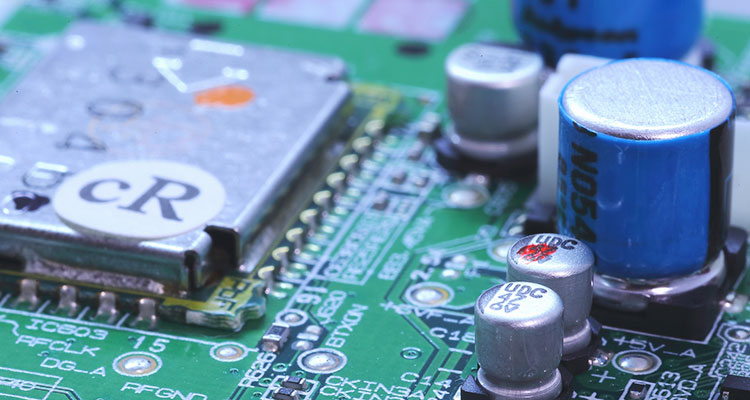
The CS Series is optimized for high-precision capacitor temperature measurement in dense electronic assemblies. It enables stable and repeatable measurements even on very small capacitor surfaces.
Key advantages:
- Stable contact on small measurement points
- Ideal for high-density PCB layouts
- High repeatability for surface temperature measurement
This makes it particularly suitable for AI data servers, semiconductor devices, and compact power electronics systems.
Flexible Surface Sensors (ST / STN Series)
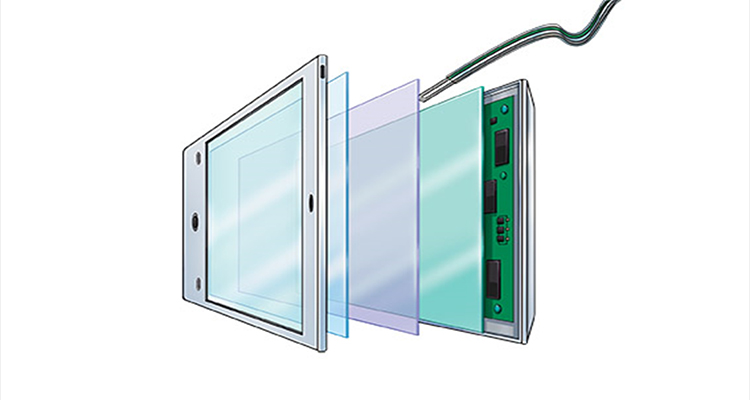
The ST Series is ideal for applications where sensors need to be attached along a surface.
Best suited for:
- Monitoring along capacitor cases or busbars
- Thermal validation in server and power supply assemblies
Its flexible structure allows easy integration into complex layouts.
High-Reliability Readout / Thermometers (HR Series)
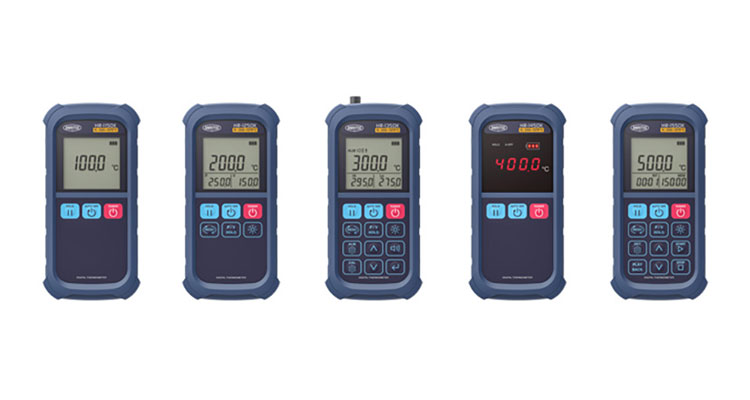
The HR Series thermometer is designed for high-reliability temperature measurement and readout in critical systems. It provides accurate temperature indication and stable data acquisition when used with thermocouples and temperature probes.
Typical applications include:
- AI infrastructure and high-performance computing systems
- Data center power supply monitoring
- Long-term temperature monitoring in industrial environments
The HR Series functions as a temperature indicator and measurement device, enabling engineers to visualize and record temperature data from sensors such as micro contact probes and surface temperature sensors.
Thermocouple Temperature Transducer /Transmitter (HPD Series)
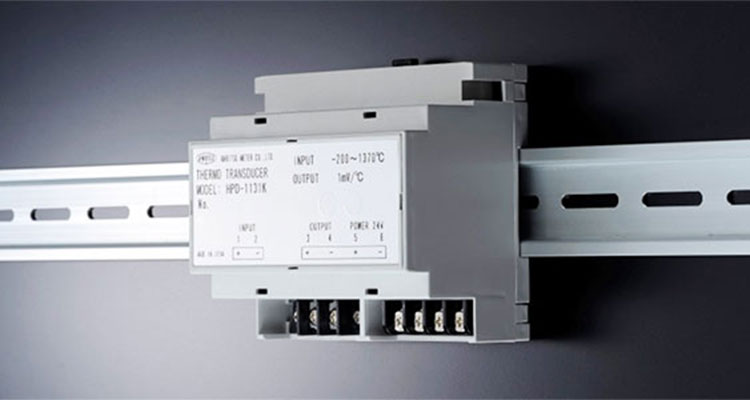
The HPD Series converts thermocouple signals into stable, usable output signals for monitoring and control systems.
- Signal conditioning and conversion (e.g., analog output)
- Improved noise resistance in electrically noisy environments
- Enables integration with data acquisition systems, PLCs, and monitoring platforms
This makes it ideal for real-time capacitor temperature monitoring in power electronics and industrial systems.
Summary: From Measurement Challenges to Reliable Thermal Design
As industries such as AI data servers, semiconductor manufacturing, EV power electronics, and cloud infrastructure continue to expand, the need for accurate and reliable thermal measurement is becoming increasingly important.
By selecting the right temperature sensing and measurement solution, engineers can address application-specific challenges:
- CS Series for high-precision measurement on micro-scale components
- ST Series for flexible surface temperature monitoring
- HR Series thermometer for accurate temperature readout and long-term monitoring
- HPD Series for thermocouple signal conversion and robust system integration
With the proper combination of sensor, transmitter, and readout, engineers can overcome measurement limitations and implement effective capacitor temperature monitoring strategies. This leads to improved thermal design, enhanced system reliability, and stable operation across next-generation electronic systems.
Important Notes / Best Practices for Capacitor Surface Temperature Measurement
The following points are important when measuring the temperature of capacitors:
- Contact-type sensors need to be kept in close contact with the object during temperature measurement.
- The contact sensor tip / head must be smaller than the area being measured.
Benefits of Advanced Capacitor Temperature Monitoring
Organizations implementing advanced capacitor temperature monitoring in AI data servers, power electronics, and high-density computing environments can achieve significant operational and engineering advantages.
Early detection of abnormal heat rise helps prevent overheating and unexpected failures, improving overall system reliability. This is especially important in AI data centers and GPU server power supplies, where stable power delivery directly affects uptime.
Continuous thermal visibility also extends equipment lifespan by reducing heat-related degradation. Maintaining proper operating conditions minimizes performance drift and improves long-term stability of critical components.
In addition, predictive maintenance using temperature trends enables more efficient operations. By identifying early signs of thermal stress, teams can schedule maintenance proactively, reducing downtime and avoiding costly disruptions in cloud infrastructure and mission-critical systems.
From a design perspective, engineers gain real-time insight into heat distribution across power modules and dense PCB assemblies, leading to improved thermal design, faster validation, and more effective cooling strategies.
Ultimately, capacitor temperature measurement plays a key role in optimizing AI infrastructure, EV systems, and renewable energy applications, making it an essential technology for next-generation electronics.
Get the Right Capacitor Temperature Measurement Solution
To select the optimal solution, key parameters include:
- Capacitor size
- Measurement location (surface / internal estimation point)
- Required temperature range
Based on these conditions, the most suitable measurement system can be configured using the above components.